Friday, 27 March 2015

Prosecutor: Passengers shrieked as jet crashed into Alps

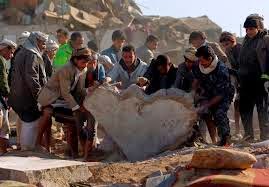
The co-pilot of the Germanwings flight that crashed in the French Alps deliberately worked to destroy the plane while passengers shrieked in terror and the pilot pounded on the cockpit door, a French prosecutor said at a news conference Thursday in Marseille.
"This was voluntary, this was deliberate," Marseille prosecutor Brice Robin said. "He refused to open the cabin door in order to let the pilot back in. I repeat. He refused to let the pilot back in. He is the one who pressed the button that allowed the plane to begin descending and lose altitude."
The information was obtained from the cockpit voice recorder of doomed Flight 9525, which suddenly began an eight-minute descent before smashing into a rugged ravine in the French Alps on Tuesday. The data recorder for the flight from Barcelona bound for Düsseldorf, Germany, has not yet been found.
Robin said the co-pilot, identified as German national Andreas Lubitz, 27, was not on a terror watch list. A federal law enforcement official told USA TODAY the FBI has been running the flight manifests through its databases but so far has found no connection to terrorism.
Lubitz said nothing during the descent, but could be heard breathing until the crash, Robin said.
"The co-pilot is the only one in the cockpit,' Robin said. "While he is alone he somehow manipulated the buttons on the flight monitoring system. He was alone at the helm of this Airbus."


Robin stressed the actions were deliberate. He said passengers could be heard screaming in fear.
"We start hearing banging, someone actually trying to break the door down," Robin said. "That's why the alarms were let off — because these were protocols that were put in place in case of any terror attack."
Robin said the plane apparently glided until it crashed into the ravine, a sound heard on the voice recorder.
"Again, no distress signal, zero, no 'help me' or SOS," he said. "Nothing of this sort was received by air-traffic control."
Robin said the voice recorder indicated dialogue between the pilot and co-pilot was normal. Robin said informed the families of the developments and that they were in shock.


German, French and Spanish authorities are investigating the crash. The FBI issued a statement saying it was offering to help French officials leading the investigation.
German carrier Lufthansa, which owns the low-cost airline, offered special flights from Barcelona and Düsseldorf to Marseille, so that those close to the victims can be near the scene of the search and recovery efforts in the French Alps.
"We are shaken by the upsetting statements of the French authorities. Our thoughts and prayers continue to be with the families and friends of the victims," Lufthansa tweeted.
Lufthansa CEO Carsten Spohr said he was left "speechless" by Robin's horrifying description of events, but said evidence thus far supports them.
"This action on the altitude controls can only be deliberate," Spohr said. "The most plausible interpretation is that the co-pilot, through a voluntary act, refused to open the cabin door to let the captain in. He pushed the button to trigger the aircraft to lose altitude.
"He operated this button for a reason we don't know yet, but it appears that the reason was to destroy this plane."


U.S. cockpit regulations don't allow a pilot to be left alone in a cockpit. The Air Line Pilots Association issued a statement saying U.S. airline procedures are "designed to ensure that there is never a situation where a pilot is left alone in the cockpit."
Lufthansa said Lubitz joined Germanwings in September 2013, directly after training, and had flown 630 hours. Spohr said the co-pilot began training in Bremen, Germany, in 2008 and later trained in Arizona.
Spohr said there was a brief interruption in training in 2009 but that he had completed qualifications for the job. German media outlets quoted classmates as saying Lubitz interrupted his training due to "burnout" and "depression."
Lubitz was included in the U.S. Federal Aviation Administration's database of certified pilots.
"He passed all medical tests, he passed all aviation tests, he passed all checks," Spohr said. "He was 100% able to fly without any limitations, without any reservations. His accomplishments were excellent. Nothing was noticed that wasn't proper."
Spohr said there were no indications that the co-pilot was dealing with a terrorist incident in the cockpit.
"We are speechless at Lufthansa and Germanwings," Spohr said. "We are shocked."
Officials have not identified the pilot, but multiple media outlets have identified him as Patrick Sonderheimer. He had more than 6,000 hours of flying time and had been Germanwings pilot since May 2014, having previously flown for Lufthansa and Condor. Robin said Sonderheimer's family is in France and would be interviewed by investigators.

All 150 passengers and crew aboard the flight killed, including three Americans. Two were identified as Yvonne Selke, a contract worker for Booz Allen Hamilton, and her daughter, Emily Selke, a 2013 graduate of Drexel University, both from Nokesville, Va. The third victim was identified as Robert Calvo, a father of two who worked for a Barcelona-based clothing company.
Among victims confirmed by the airline were 72 Germans and 35 Spaniards. There were two victims each from Australia, Argentina, Iran and Venezuela. One each came from Britain, the Netherlands, Colombia, Mexico, Japan, Denmark, Belgium and Israel.
A moment of silence was held Thursday at Joseph-Koenig High School in Haltern Am See in west Germany, which lost 16 10th-graders and two teachers in the crash.

Prosecutor: Passengers shrieked as jet crashed into Alps

The co-pilot of the Germanwings flight that crashed in the French Alps deliberately worked to destroy the plane while passengers shrieked in terror and the pilot pounded on the cockpit door, a French prosecutor said at a news conference Thursday in Marseille.
"This was voluntary, this was deliberate," Marseille prosecutor Brice Robin said. "He refused to open the cabin door in order to let the pilot back in. I repeat. He refused to let the pilot back in. He is the one who pressed the button that allowed the plane to begin descending and lose altitude."
The information was obtained from the cockpit voice recorder of doomed Flight 9525, which suddenly began an eight-minute descent before smashing into a rugged ravine in the French Alps on Tuesday. The data recorder for the flight from Barcelona bound for Düsseldorf, Germany, has not yet been found.
Robin said the co-pilot, identified as German national Andreas Lubitz, 27, was not on a terror watch list. A federal law enforcement official told USA TODAY the FBI has been running the flight manifests through its databases but so far has found no connection to terrorism.
Lubitz said nothing during the descent, but could be heard breathing until the crash, Robin said.
"The co-pilot is the only one in the cockpit,' Robin said. "While he is alone he somehow manipulated the buttons on the flight monitoring system. He was alone at the helm of this Airbus."


Robin stressed the actions were deliberate. He said passengers could be heard screaming in fear.
"We start hearing banging, someone actually trying to break the door down," Robin said. "That's why the alarms were let off — because these were protocols that were put in place in case of any terror attack."
Robin said the plane apparently glided until it crashed into the ravine, a sound heard on the voice recorder.
"Again, no distress signal, zero, no 'help me' or SOS," he said. "Nothing of this sort was received by air-traffic control."
Robin said the voice recorder indicated dialogue between the pilot and co-pilot was normal. Robin said informed the families of the developments and that they were in shock.


German, French and Spanish authorities are investigating the crash. The FBI issued a statement saying it was offering to help French officials leading the investigation.
German carrier Lufthansa, which owns the low-cost airline, offered special flights from Barcelona and Düsseldorf to Marseille, so that those close to the victims can be near the scene of the search and recovery efforts in the French Alps.
"We are shaken by the upsetting statements of the French authorities. Our thoughts and prayers continue to be with the families and friends of the victims," Lufthansa tweeted.
Lufthansa CEO Carsten Spohr said he was left "speechless" by Robin's horrifying description of events, but said evidence thus far supports them.
"This action on the altitude controls can only be deliberate," Spohr said. "The most plausible interpretation is that the co-pilot, through a voluntary act, refused to open the cabin door to let the captain in. He pushed the button to trigger the aircraft to lose altitude.
"He operated this button for a reason we don't know yet, but it appears that the reason was to destroy this plane."


U.S. cockpit regulations don't allow a pilot to be left alone in a cockpit. The Air Line Pilots Association issued a statement saying U.S. airline procedures are "designed to ensure that there is never a situation where a pilot is left alone in the cockpit."
Lufthansa said Lubitz joined Germanwings in September 2013, directly after training, and had flown 630 hours. Spohr said the co-pilot began training in Bremen, Germany, in 2008 and later trained in Arizona.
Spohr said there was a brief interruption in training in 2009 but that he had completed qualifications for the job. German media outlets quoted classmates as saying Lubitz interrupted his training due to "burnout" and "depression."
Lubitz was included in the U.S. Federal Aviation Administration's database of certified pilots.
"He passed all medical tests, he passed all aviation tests, he passed all checks," Spohr said. "He was 100% able to fly without any limitations, without any reservations. His accomplishments were excellent. Nothing was noticed that wasn't proper."
Spohr said there were no indications that the co-pilot was dealing with a terrorist incident in the cockpit.
"We are speechless at Lufthansa and Germanwings," Spohr said. "We are shocked."
Officials have not identified the pilot, but multiple media outlets have identified him as Patrick Sonderheimer. He had more than 6,000 hours of flying time and had been Germanwings pilot since May 2014, having previously flown for Lufthansa and Condor. Robin said Sonderheimer's family is in France and would be interviewed by investigators.

All 150 passengers and crew aboard the flight killed, including three Americans. Two were identified as Yvonne Selke, a contract worker for Booz Allen Hamilton, and her daughter, Emily Selke, a 2013 graduate of Drexel University, both from Nokesville, Va. The third victim was identified as Robert Calvo, a father of two who worked for a Barcelona-based clothing company.
Among victims confirmed by the airline were 72 Germans and 35 Spaniards. There were two victims each from Australia, Argentina, Iran and Venezuela. One each came from Britain, the Netherlands, Colombia, Mexico, Japan, Denmark, Belgium and Israel.
A moment of silence was held Thursday at Joseph-Koenig High School in Haltern Am See in west Germany, which lost 16 10th-graders and two teachers in the crash.


Yemen fighting grows into regional conflict


Sectarian fighting escalated dramatically in Yemen Thursday, as an unfolding civil war began to look more like a regional conflict between Sunni-led Saudi Arabia and Shiite power Iran.
A Saudi-led coalition of Arab countries conducted airstrikes against Shiite rebels fighting the U.S.-backed regime of Yemen's President Abed-Rabbo Mansour Hadi. He fled to Saudi Arabia on Wednesday, as the Iranian-backed Houthi rebels advanced on his stronghold in Aden.
Jordan and other Sunni Arab countries said they were participating in the coalition, called Decisive Storm.
Egypt also entered the fray, saying it is prepared to launch a ground offensive in the region to counter the Houthis.
Iran called the attacks on the Houthis a "dangerous step."
The United States, which considered Hadi's Sunni regime a critical ally in its fight against terrorism, is not participating in the airstrikes. But the Pentagon said it is assisting in communication, logistics and planning support.

U.S.-Iranian tensions also surfaced in the growing sectarian conflict in Iraq, although both have a common enemy in the Islamic State, which seized parts of the country last year.
A U.S.-led coalition launched airstrikes against Islamic State militants in Tikrit, Iraq, on Wednesday after an Iraqi offensive to oust the Sunni militants had stalled. The Pentagon said it joined the effort only after the Iraqi government agreed to remove Iranian-backed Shiite militias that are fighting alongside government troops.
"I hope we never coordinate or cooperate with Shia militias," Gen. Lloyd Austin, the head of U.S. Central Command, told the Senate Armed Services Committee.
He said removing them from the Tikrit operation was a condition for providing the airstrikes and surveillance support. The United States has continued to provide air strikes in other parts of the country.
The Tikrit operation underscores U.S. reluctance to get dragged into a sectarian conflict between Iraq's Shiite-led government and the Islamic State, which holds majority Sunni areas.
For several weeks Shiite militias had taken the lead in liberating Tikrit with support from Iranian advisers, rockets and artillery.
Spokesmen for several Shiite militia claimed they withdrew from the operation on their own to protest the American role in the offensive, the Associated Press reported.Other militias said they had not withdrawn.
Unable to muster a robust army force to oust the Islamic State militants earlier this month from Tikrit, a Sunni city, the Iraqi military turned to Shiite militiamen backed by Iran to lead the attack.
After initial successes, the offensive bogged down, as the attacking forces had trouble ejecting several hundred Islamic State extremists holed up in the city and currently outnumbered by as much as 25 to 1.
Fighting in urban terrain is among the most complicated type of warfare, requiring trained soldiers, precision weapons and specialized tactics to prevent mass civilian casualties.
The militants defending the city used improvised explosives to slow the movement of Iraq's forces and built elaborate defenses.
Austin said the militias lacked precision weapons and an effective plan to take Tikrit.

Yemen fighting grows into regional conflict


Sectarian fighting escalated dramatically in Yemen Thursday, as an unfolding civil war began to look more like a regional conflict between Sunni-led Saudi Arabia and Shiite power Iran.
A Saudi-led coalition of Arab countries conducted airstrikes against Shiite rebels fighting the U.S.-backed regime of Yemen's President Abed-Rabbo Mansour Hadi. He fled to Saudi Arabia on Wednesday, as the Iranian-backed Houthi rebels advanced on his stronghold in Aden.
Jordan and other Sunni Arab countries said they were participating in the coalition, called Decisive Storm.
Egypt also entered the fray, saying it is prepared to launch a ground offensive in the region to counter the Houthis.
Iran called the attacks on the Houthis a "dangerous step."
The United States, which considered Hadi's Sunni regime a critical ally in its fight against terrorism, is not participating in the airstrikes. But the Pentagon said it is assisting in communication, logistics and planning support.

U.S.-Iranian tensions also surfaced in the growing sectarian conflict in Iraq, although both have a common enemy in the Islamic State, which seized parts of the country last year.
A U.S.-led coalition launched airstrikes against Islamic State militants in Tikrit, Iraq, on Wednesday after an Iraqi offensive to oust the Sunni militants had stalled. The Pentagon said it joined the effort only after the Iraqi government agreed to remove Iranian-backed Shiite militias that are fighting alongside government troops.
"I hope we never coordinate or cooperate with Shia militias," Gen. Lloyd Austin, the head of U.S. Central Command, told the Senate Armed Services Committee.
He said removing them from the Tikrit operation was a condition for providing the airstrikes and surveillance support. The United States has continued to provide air strikes in other parts of the country.
The Tikrit operation underscores U.S. reluctance to get dragged into a sectarian conflict between Iraq's Shiite-led government and the Islamic State, which holds majority Sunni areas.
For several weeks Shiite militias had taken the lead in liberating Tikrit with support from Iranian advisers, rockets and artillery.
Spokesmen for several Shiite militia claimed they withdrew from the operation on their own to protest the American role in the offensive, the Associated Press reported.Other militias said they had not withdrawn.
Unable to muster a robust army force to oust the Islamic State militants earlier this month from Tikrit, a Sunni city, the Iraqi military turned to Shiite militiamen backed by Iran to lead the attack.
After initial successes, the offensive bogged down, as the attacking forces had trouble ejecting several hundred Islamic State extremists holed up in the city and currently outnumbered by as much as 25 to 1.
Fighting in urban terrain is among the most complicated type of warfare, requiring trained soldiers, precision weapons and specialized tactics to prevent mass civilian casualties.
The militants defending the city used improvised explosives to slow the movement of Iraq's forces and built elaborate defenses.
Austin said the militias lacked precision weapons and an effective plan to take Tikrit.

Sunday, 22 March 2015

Facebook Messenger, self-drive cars, Smiletime - Weekend listening


We've got 6 new podcasts for your weekend listening pleasure, plus a few classics from the South by Southwest festival. As the saying goes--ICYMI.

Our Tech Roundtable, which we record at the Tunein.com studios here in the heart of Silicon Beach, looks at passwords of the future. Yahoo introduced a new way to log-in this week, via a code sent by text. Sounds great in theory--but what if you can't find your phone? Maybe try Microsoft's new biometric approach to passwords, perhaps? Logging on with your eyes will be a feature of the new Windows 10, coming in the summer.


Our roundtable featured Dave Fink, a partner with incubator Science. Inc., investors Eva Ho (Susa Ventures) and Brian Garrett (Crosscut Ventures) and Alex Krugov, the co-founder of Smiletime, the new app for talking back to your TV. We also weighed in on Facebook's new scheme to pay friends via Messenger and Apple's reported plan to take on cable TV with a new mini-network subscription service aimed at cord cutters


Alex Krugov explains the in and outs of his new Smiletime, which lets viewers interact with cast and crew of such popular TV series as The Flash and Arrow after they air.

Our roundtable panelists Ho, Garrett and Fink talk about what they seek when they take on new tech investments and why they like working with Los Angeles startups.

From the South by Southwest fest--Jon Swartz talks about those robot protests outside the convention center.

 one new app dominated all chatter--Meerkat. Open it up, click a button and you're instantly broadcasting live video to your Twitter followers. Streaming video has never been this easy. After meeting up with analyst Charlene Li at the JW Marriott for a chat about her new book, we saw a bunch of folks in brightly colored yellow T-shirts and it was clear we were in Meerkat land. We grabbed co-founder Ben Rubin for a quick chat.


And here's our final SXSW podcast from earlier in the week, recorded from a booth at the historic Magnolia Cafe South on Congress Avenue. I spoke with USA TODAY photo journalists Sean Fujiwara and Kaveh Rezaei about some of our highlights that day--which included a 3D prosthetic arm and a chat with the Winklevoss brothers about the future of money.

Facebook Messenger, self-drive cars, Smiletime - Weekend listening


We've got 6 new podcasts for your weekend listening pleasure, plus a few classics from the South by Southwest festival. As the saying goes--ICYMI.

Our Tech Roundtable, which we record at the Tunein.com studios here in the heart of Silicon Beach, looks at passwords of the future. Yahoo introduced a new way to log-in this week, via a code sent by text. Sounds great in theory--but what if you can't find your phone? Maybe try Microsoft's new biometric approach to passwords, perhaps? Logging on with your eyes will be a feature of the new Windows 10, coming in the summer.


Our roundtable featured Dave Fink, a partner with incubator Science. Inc., investors Eva Ho (Susa Ventures) and Brian Garrett (Crosscut Ventures) and Alex Krugov, the co-founder of Smiletime, the new app for talking back to your TV. We also weighed in on Facebook's new scheme to pay friends via Messenger and Apple's reported plan to take on cable TV with a new mini-network subscription service aimed at cord cutters


Alex Krugov explains the in and outs of his new Smiletime, which lets viewers interact with cast and crew of such popular TV series as The Flash and Arrow after they air.

Our roundtable panelists Ho, Garrett and Fink talk about what they seek when they take on new tech investments and why they like working with Los Angeles startups.

From the South by Southwest fest--Jon Swartz talks about those robot protests outside the convention center.

 one new app dominated all chatter--Meerkat. Open it up, click a button and you're instantly broadcasting live video to your Twitter followers. Streaming video has never been this easy. After meeting up with analyst Charlene Li at the JW Marriott for a chat about her new book, we saw a bunch of folks in brightly colored yellow T-shirts and it was clear we were in Meerkat land. We grabbed co-founder Ben Rubin for a quick chat.


And here's our final SXSW podcast from earlier in the week, recorded from a booth at the historic Magnolia Cafe South on Congress Avenue. I spoke with USA TODAY photo journalists Sean Fujiwara and Kaveh Rezaei about some of our highlights that day--which included a 3D prosthetic arm and a chat with the Winklevoss brothers about the future of money.

Rio corruption scandal raises red flag on Olympic plans

Opposition to the ruling Workers' Party is reaching a fever pitch as demonstrators take to Brazil's streets to pressure the government, many exasperated by a graft scandal unfolding at the state oil company and a tanking economy.

The movement is putting the beleaguered President Dilma Rousseff on the back foot, with the president quickly responding to the protests with a series of anti-corruption proposals announced Wednesday. It also raises a red flag on how the scandal could affect preparations for the Olympics 17 months from now.
The graft scandal, which has been investigated over the past year and involves allegations of hundreds of millions in kickbacks from contractors of the state oil company to the ruling party, is putting the Workers' Party in its most serious political crisis in its 12 years in the presidency.
Rousseff's disapproval rate amongst Brazilians is the highest of any president since 1992 — when President Fernando Collor was impeached for corruption charges.
"We don't want this promiscuity between businesses and government," said Edna Theodoro, 59, a lawyer at a protest last Sunday in Rio de Janeiro. Similar demonstrations under the banner of "Impeachment for Dilma" brought hundreds of thousands to the streets that day, reportedly in more than a hundred cities. Theodoro referred to the contractors cited in the investigation, dubbed by police the "Car Wash Operation," as "sharks."
The investigations have implicated six companies which are also responsible for the lion's share of infrastructure projects for the Summer Olympics, to be held in Rio next year. Major projects they are responsible for include the Olympic Park, the athlete's village, and transportation and sanitation projects related to the Games.
The Car Wash Operation has named more than 50 current and former politicians, many in the close circle of President Rousseff and allied with her party. They also include Rio de Janeiro's current governor and his predecessor.

A cooperating witness from one of the implicated contractors told investigators that the collusion amongst companies as they arranged bribes and divided lucrative deals became so well organized that it was comparable to the rules guiding a soccer tournament.
The criminal investigation and a parallel inquiry by Brazil's comptroller general could imperil many companies' access to credit and their ability to receive government contracts. In the oil sector, Petrobras has already halted payments on many projects and prohibited some service providers from signing new contracts, bringing projects like an ambitious refinery in the suburbs of Rio all but to a stop.
But in a twist, even as a number of these companies have long been the object of protest by mega-sporting event activists on the left who complain about their lack of transparency, the tone of demonstrations last week and the country's polarized political climate have left many critics unsure of how to respond.
Contracts amongst six companies cited in the Car Wash tally a reported 27 billion reais (approximately $9 billion), about three-quarters of the budget for Olympic infrastructure and related projects.
The companies are being hit hard in the Car Wash investigations. For example, a former Petrobras manager testified that Andrade Gutierrez — responsible for pollution projects in the region of the Olympic Park — paid bribes for six projects worth about $4 billion in contracts from the oil company.
In February two executives from Camargo Corrêa, which is involved in two public transportation projects linked to the 2016 Games, signed plea bargains with the government and became cooperating witnesses for the Car Wash Operation.
In response to requests for comments, Olympic contractors OAS Construction, Queiroz Galvão, and Andrade Gutierrez all expressed confidence in the companies' abilities to carry out their projects for 2016 and said that work continued on schedule. Odebrecht, Camargo Corrêa and Carioca Engenharia did not respond to requests for comment.
All are under investigation by the national comptroller general except for Carioca Engenharia.
Brazilians have expressed a multitude of grievances on the streets — from complaints over the poor quality of public schools and hospitals to exasperation with pricey public bus fares — since nationwide protests alarmed the government since 2013.
Last week showed a turn: Now demonstrators focused their ire squarely on the ruling Workers' Party, with many calling for the president's impeachment. The current protests have tapped into the long-seething resentment on Brazil's right, who complain that the Workers' Party has become a corrupt patronage machine which effectively buys votes through populist handouts while taxes are high and public services deficient.
But some say the outrage over the Car Wash investigation is misguided. Corruption is not just today and it's not just in Petrobras, said João Roberto Lopes Pinto, a professor at UniRio and the coordinator of an institute that researches the rise of Brazil's largest companies.
He said many on Brazil's left are avoiding what they see as an opportunistic movement to focus only on the Workers' Party and not a series of companies whose relationships with the Brazilian government date back to the 1964-85 military dictatorship.
"What the Car Wash Operation presents us are very strong denunciations of the institutionalization of this cartel. It's not just an episodic thing," said Mr. Pinto. "It seems to confirm many of our suspicions about the cartel-style way that many of these enterprises act."
That ambivalence over how to protest in the current political climate was on display last week at a gathering of the activist group called the Popular Committee of the World Cup and the Olympics in the grunge-bohemian party neighborhood Lapa.
The current graft investigations implicate the very companies to which they had long been calling attention, but the polarized political moment meant that the anti-government marches of the weekend were far off their radar. Members in the group said they had no plans to carry out any sort of counter-demonstrations, neither wanting to play into the hands of the Brazilian right nor look like pro-Rousseff governistas.
Asked if last Sunday's demonstrations were similar to other political crises in Brazil — the vote-buying "mensalão" monthly payoff scheme during the government of Rousseff's predecessor or the 1992 impeachment of President Collor, Caio Lima, a self-described socialist economist, deadpanned: "You should have asked if it's reminiscent of 1964."
That was the year Brazil's armed forces overthrew the populist government of President João Goulart, installing a 21-year military dictatorship. One of the political prisoners who spent three years in jail and suffered torture was a 22-year-old member of a banned revolutionary group named Dilma Rousseff.